Dushka within Zagorske Gore
22.03.2026.
Introduction to Zagorske Gore
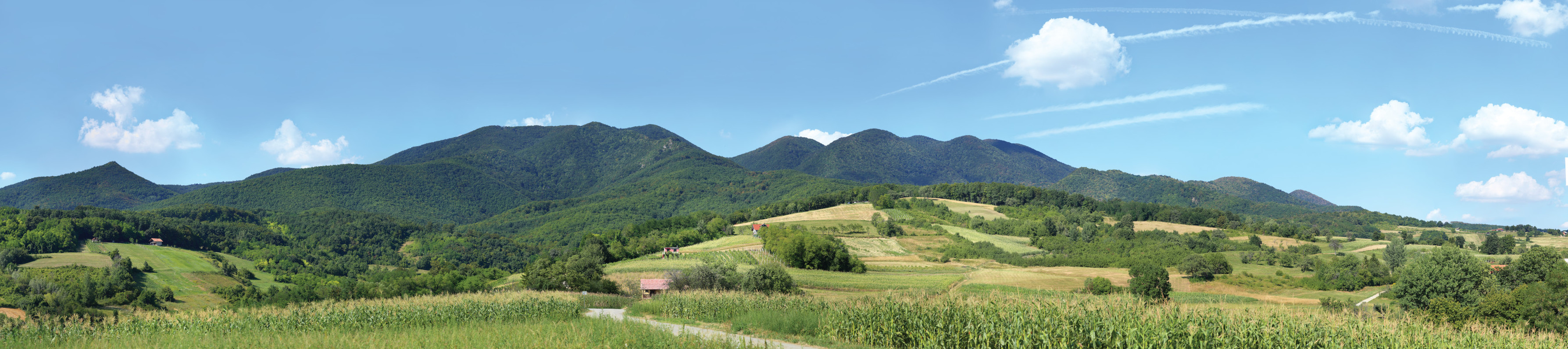
Somewhere between the noise of everyday life and complete silence lies a landscape that has only recently received formal recognition of what it has always been. By unanimous decision of the Croatian Parliament on March 6, 2026, Zagorske Gore were declared the youngest nature park in Croatia – the thirteenth in the country, following Dinara Nature Park. Yet their value does not stem from the date of designation, but from the fact that they have remained preserved as a whole: a space where forest, meadow and inhabited landscape are not separated, but interconnected into a functional, living system.
Location of Dushka and ecological context
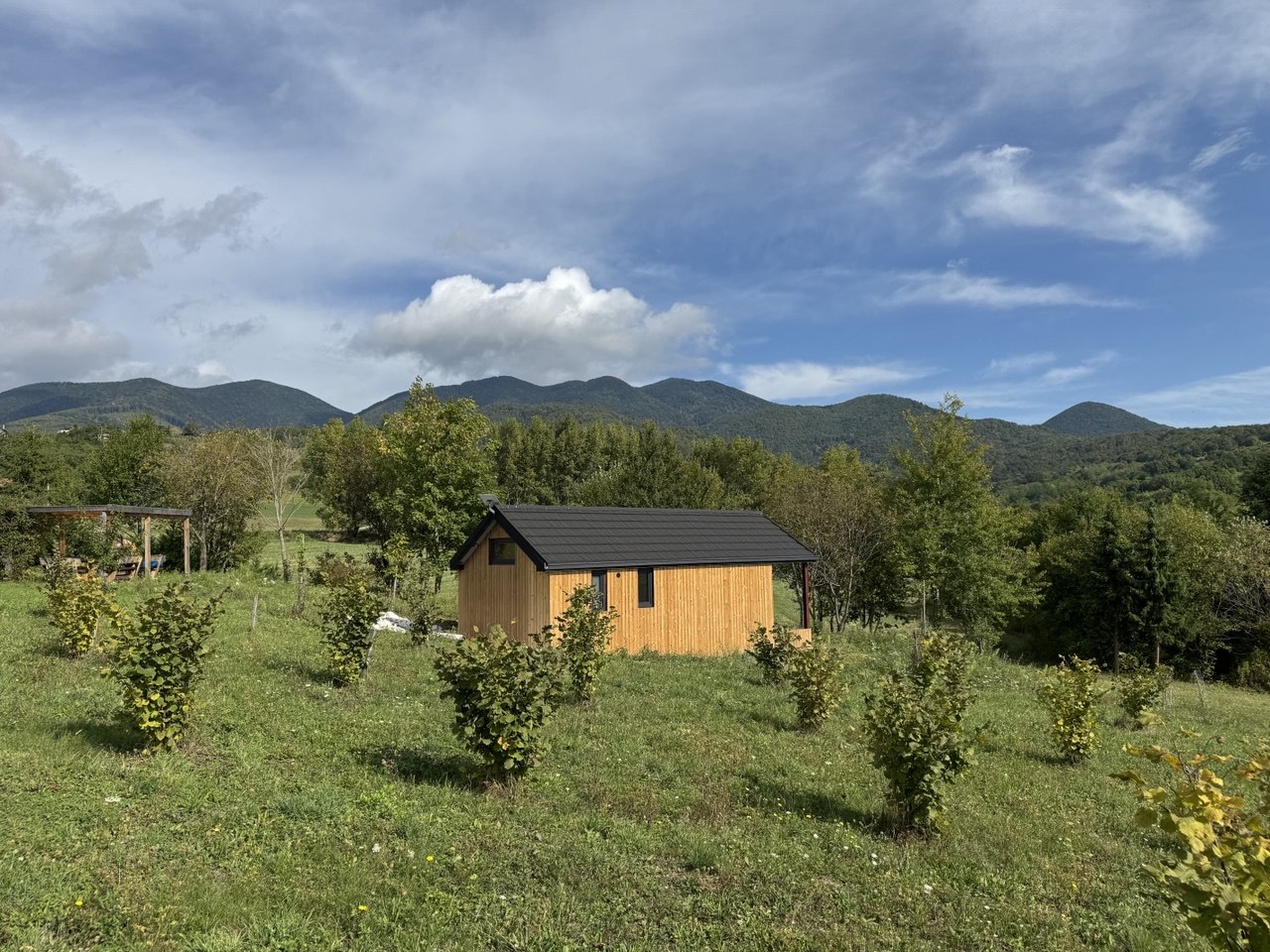
Within this ecosystem, on the southern, sunlit slopes of Ivanščica, lies Dushka. This position is not merely aesthetic or accidental. Southern exposure means more solar radiation, a longer vegetation period and a more stable microclimate. Ivanščica, whose highest peak reaches about 1,060 meters above sea level, together with Strahinjčica, Macelj and Ravna Gora, plays a key role in environmental balance: shaping air circulation, retaining moisture, participating in water cycles through filtration and storage of drinking water, and defining transitions between different habitats. These transitions, known in ecology as ecotones, are among the richest zones of biodiversity.
A micro-scale landscape model
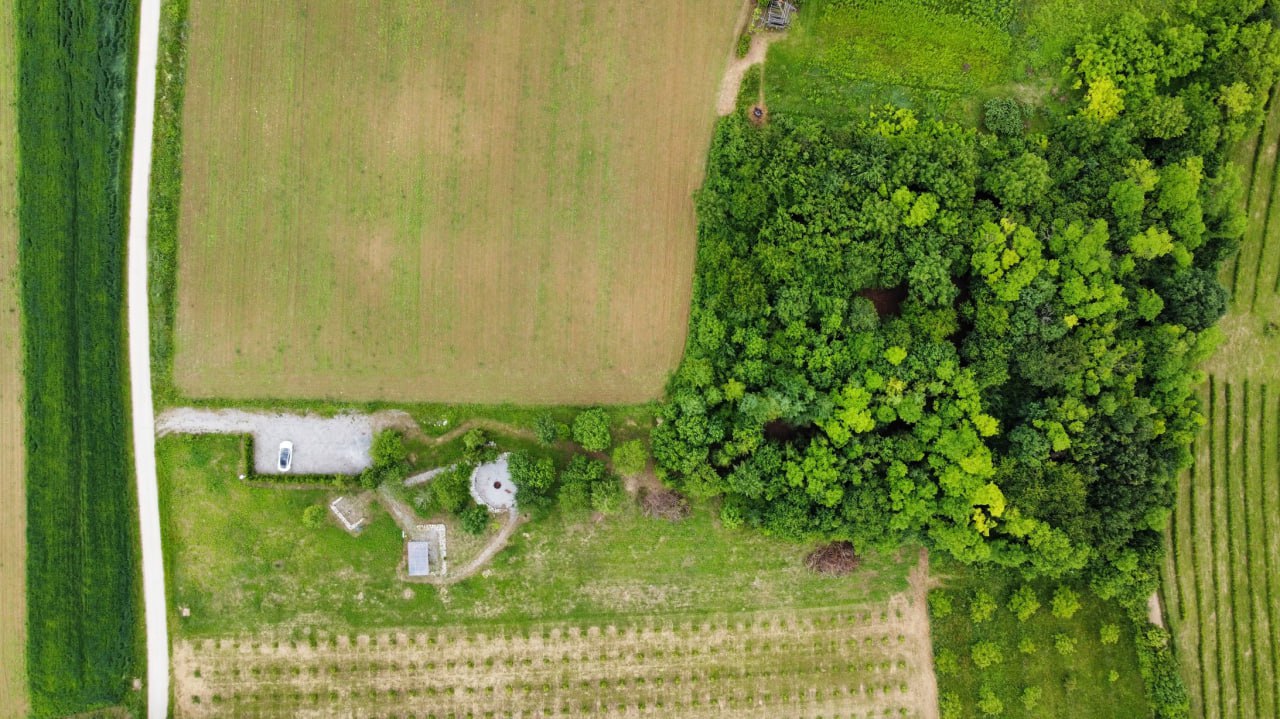
Within the relatively small area of Dushka (approx. 7,500 m2), it is possible to recognize the structure of the entire park on a reduced scale: enclosed forest providing shade and stability (approx. 4,000 m2), open meadows bringing light and dynamics, and a cultivated area that allows human presence without disturbing balance. Within just a few steps, the micro-environment changes – not only visually, but also in temperature, humidity, sound and the presence of different species. Dushka thus functions as a micro-model of Zagorske Gore, where the complexity of the landscape can be experienced directly.
Staying as active observation
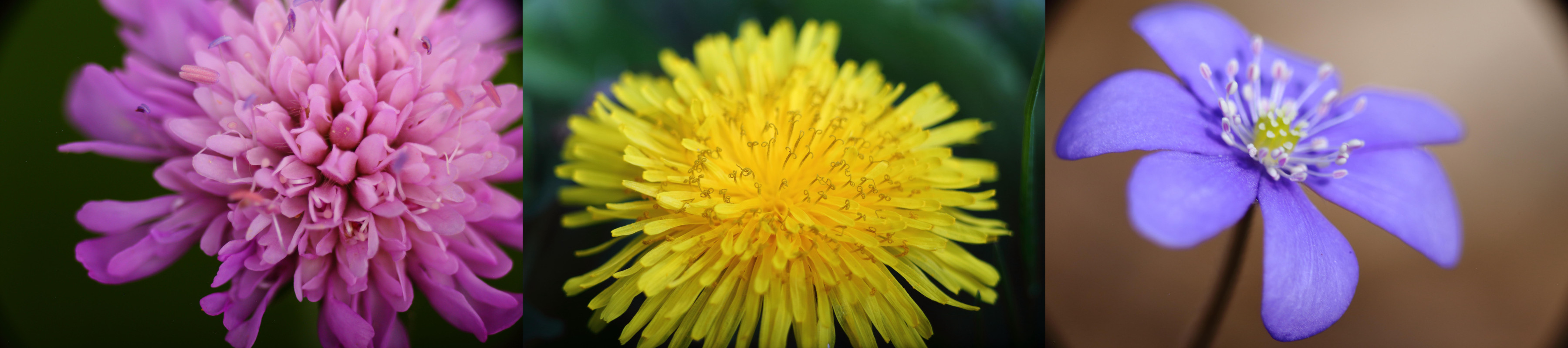
In such a context, a stay easily shifts from passive rest to active observation. Digital platforms such as iNaturalist allow guests to turn their own observations into structured records that contribute to a global biodiversity database. At the same time, Bioportal provides insight into the broader spatial context. Yet perhaps the most important transformation happens without technology: perception deepens, and the space begins to reveal itself through details often unnoticed in urban environments.
Water as a foundation of spatial quality
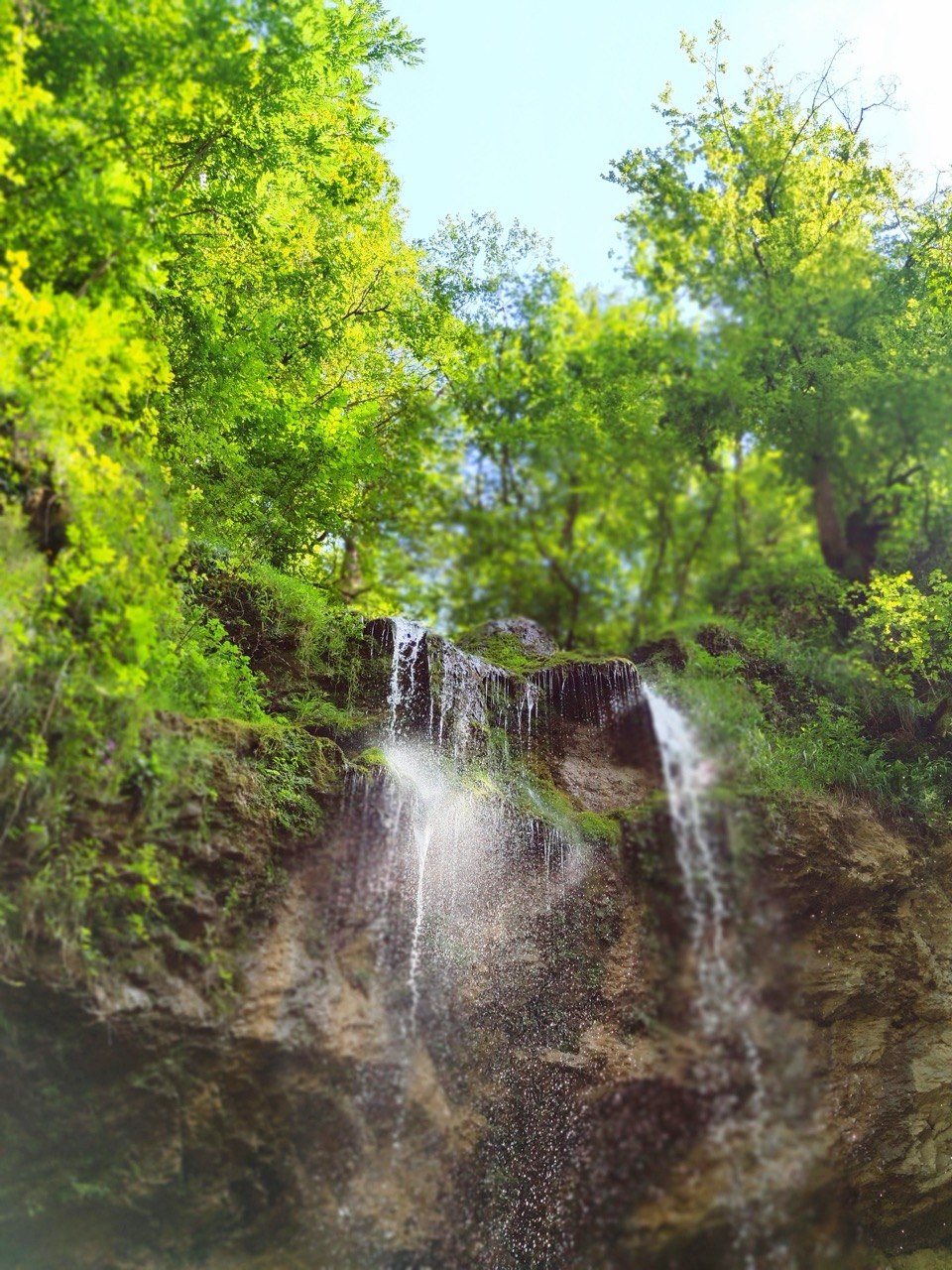
One of these elements is water, which reaches Dushka through a supply system developed and maintained by the local community, directly from Ivanščica, from the “Belečki Martin” spring. Hydrologically, it represents a short and relatively unchanged path from source to user. Experientially, it is a quality that is difficult to explain but easy to recognize. Such elements – water, soil, microclimate – form the foundation of what is often referred to as the “quality of space”.
Night as a second dimension
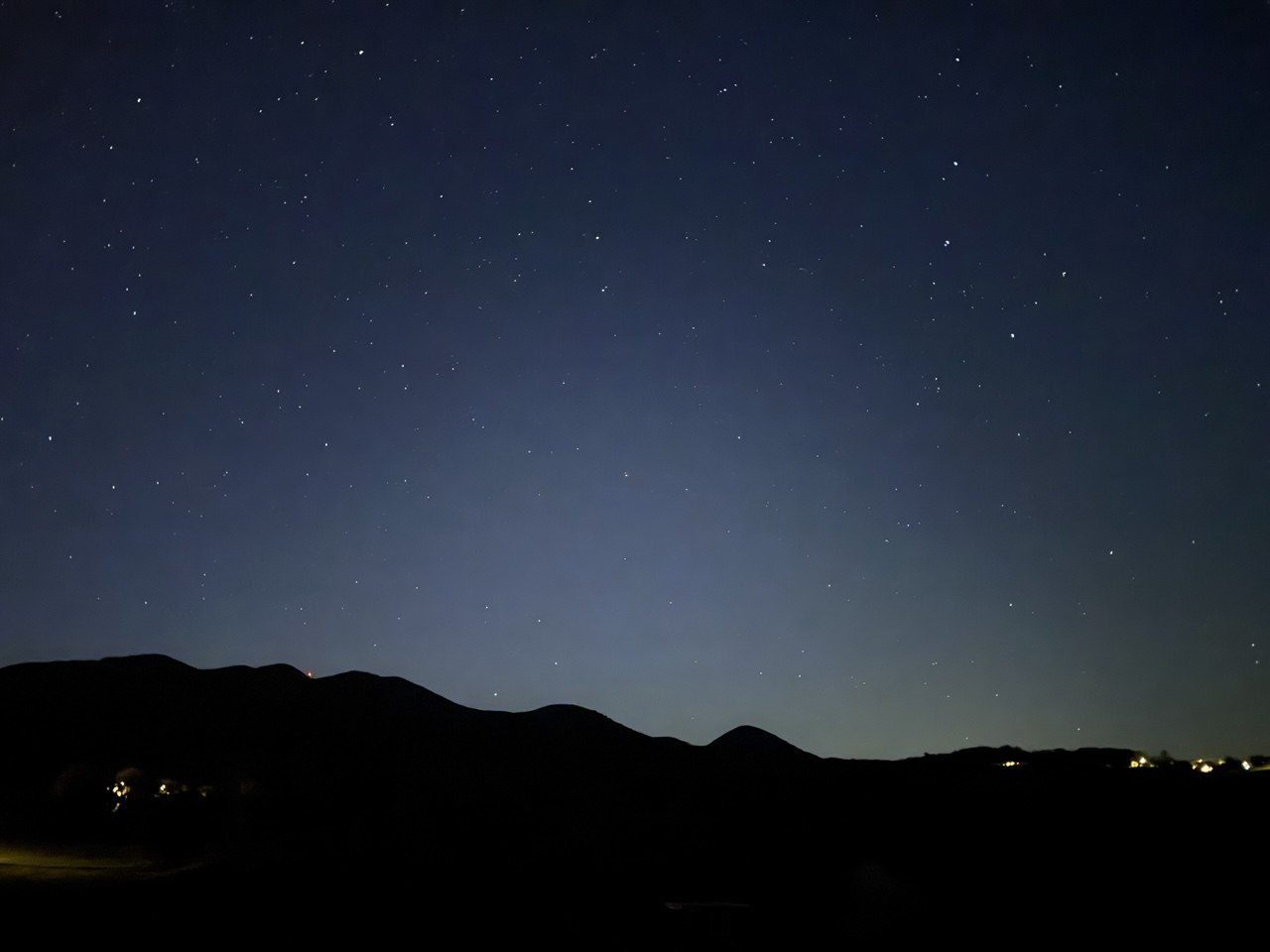
The experience of this place does not end with sunset. In the darkness of night, the landscape reveals another dimension. Under conditions of low light pollution, the night sky becomes part of the landscape again, not merely its background.
After a short adjustment to darkness, the number of visible stars increases, contrasts become stronger, and the Milky Way becomes visible again. This vertical dimension – the relationship between ground and sky – regains its presence. Night at Dushka does not change the place, but the way it is experienced.
Development in harmony with the space
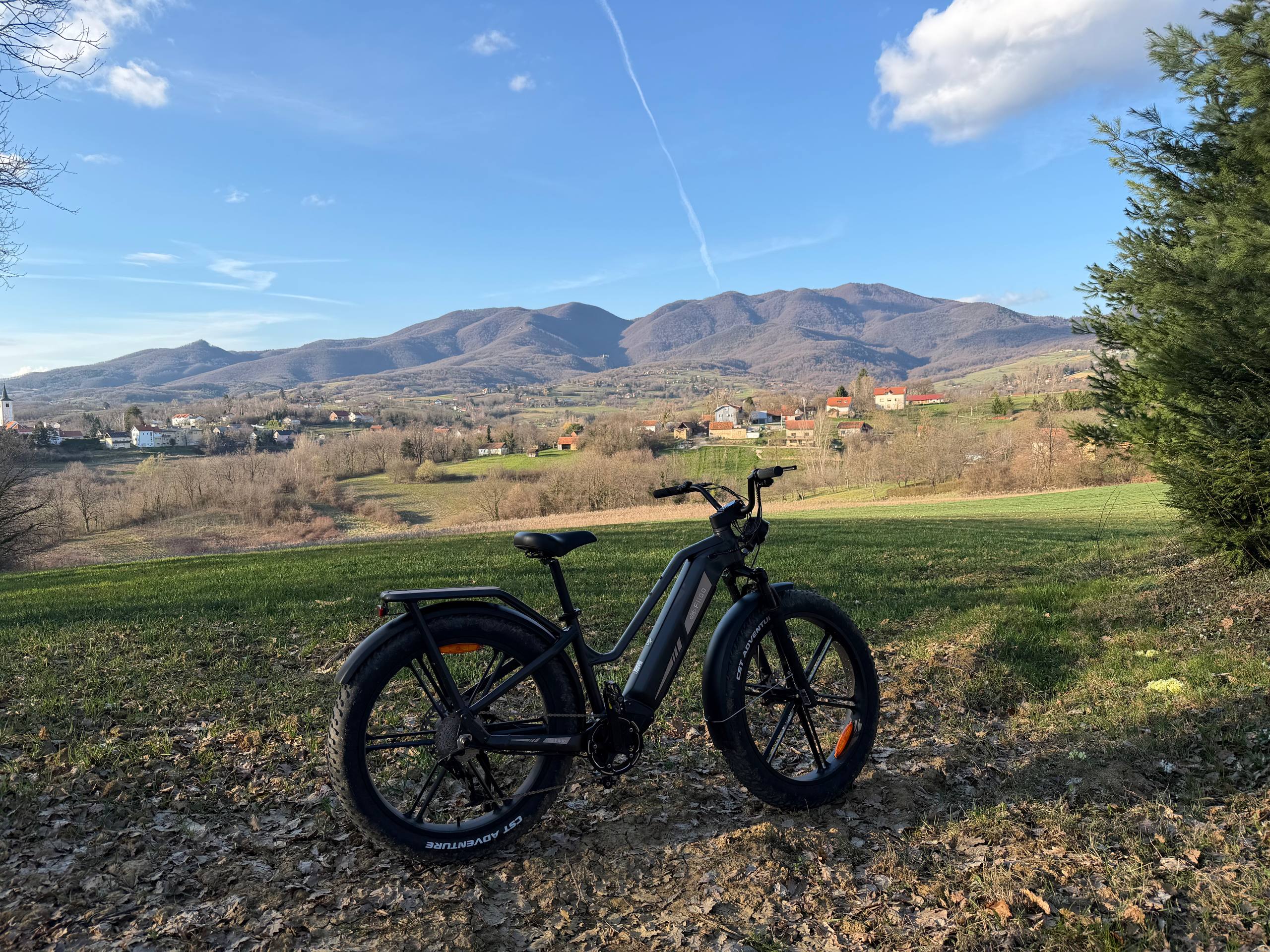
The development of Dushka follows this same logic. Future additions such as e-bikes and observation tools are not designed as attractions, but as ways to deepen the understanding of the space. The goal is not to increase intensity, but to enhance quality.
Accessibility and regional context
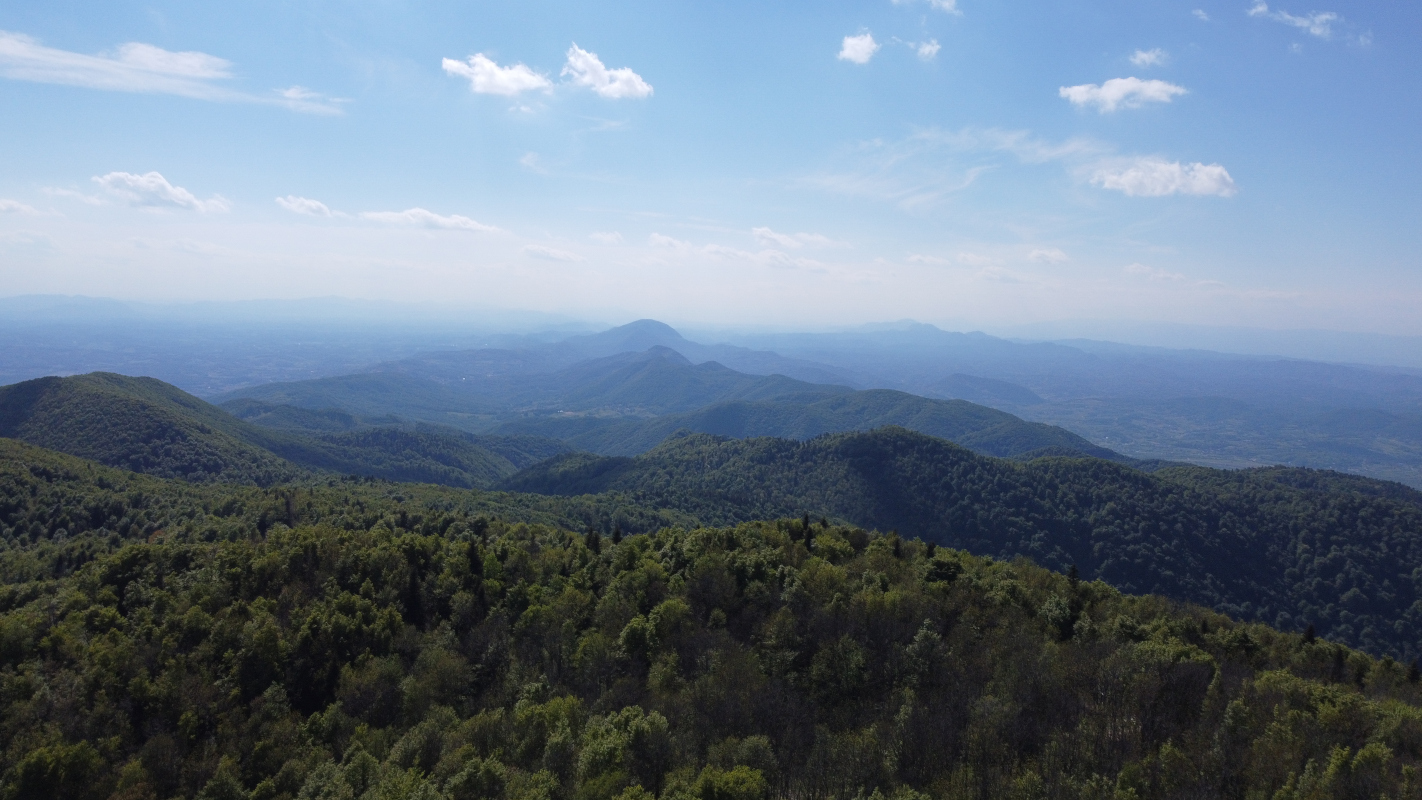
Dushka is located about one hour from Zagreb, even closer to Varaždin, while Ljubljana and the Adriatic coast are within two hours. Vienna and Budapest are within three to four hours, placing Dushka within reach of much of Central Europe.
Conclusion
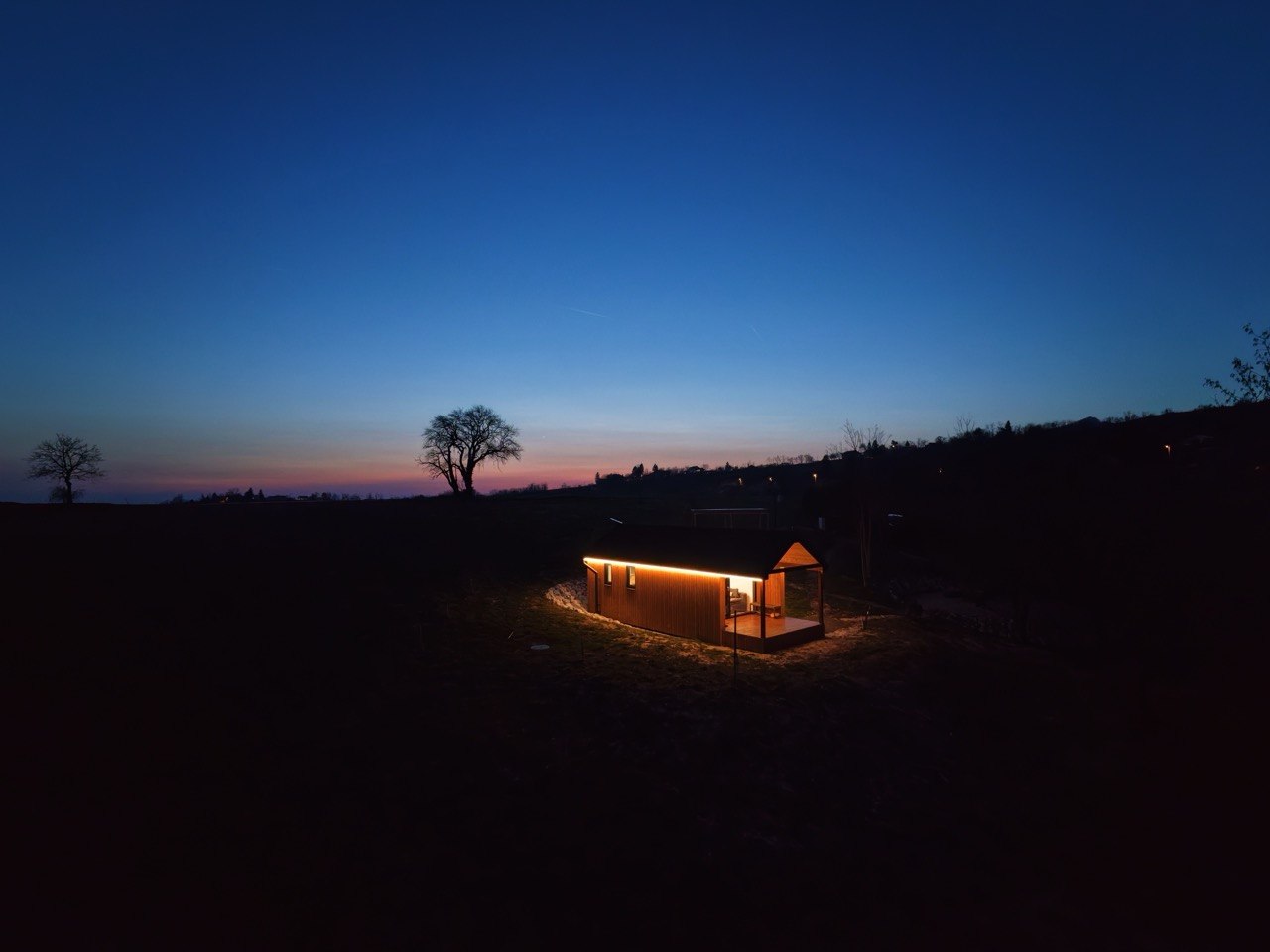
Ultimately, the value of Dushka and Zagorske Gore lies in continuity – spatial, ecological and cultural. Dushka translates this continuity into direct experience. Not through spectacle, but through layered simplicity, where space becomes something more than scenery.
Experience Dushka
A private cabin on the slopes of Ivanščica.
Within Zagorske Gore.